Mongolia
Why Travel to Mongolia
Visit the Least Densely Populated Country in the World
Mongolia travel changes you and makes you appreciate the beautiful patches on the earth’s surface not ruined by extreme modernization, pollution and overpopulation.
My time in Mongolia meant experiencing everything from bush camping to ger camps, being at one with nature (and not care who sees you squatting in the process) and realising that animals like to roam and Mongolians love to chat – right outside your Ger from 5 am.
I saw a night sky so clear that I didn’t think you could ever see so many stars. I traversed a land so serene in isolation and culture so welcoming that I hope it never, ever becomes ruined by tourist traps or the tight grips of mass capitalism (currently contained to Ulaanbaatar).
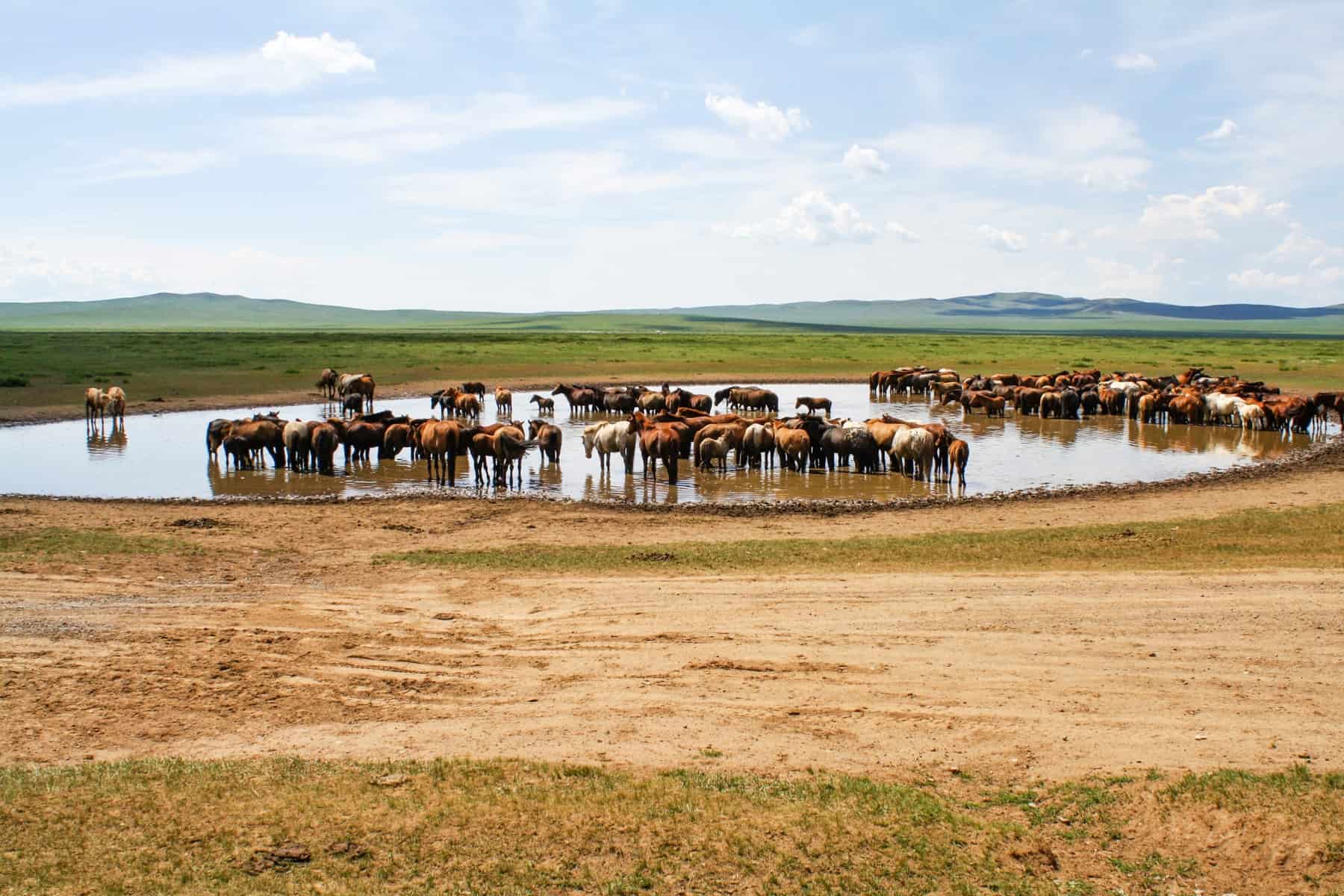
Off the Beaten Track Adventure
If you want to get off the beaten track, not be on any set grid and take each day as it comes, you will love Mongolia. But this also comes with its frustrations where you need droves of patience and a good chunk of travel time to spare.
Firstly, there are hardly any roads. Roads are dirt tracks or pre-made grooves in the land pointing the way, and paved highroads are very few and far between.
Secondly, Mongolia is prone to unpredictable weather conditions. That means random onslaughts of rain and the likelihood that you are likely to get bogged at some point. There were countless numbers of times where we had to dig out and push the truck or find locals to come to the rescue – tractors are a saving grace here.
It’s a vast country that you could get lost in for weeks on end, and when you accept the setbacks, you start to see them as part of the big adventure – travel at its most raw. Back to basics, getting dirty and struggling with the lack of modern amenities we too often take for granted is part of what travelling in Mongolia is all about.
When is the Best Time to Go to Mongolia?
The summer season between May to September is said to be the best time to go to Mongolia. July and August are the hottest months, with temperatures in the Gobi Desert reaching 40°C. Rainfall is at its highest between June and September, balancing out the heat while keeping the forest and valley lands, in particular, lush and fertile.
Mongolia’s winter season is from November to February. While some people like to experience the landscape in this snowy season, temperatures can drop to below minus 20°C – a harsh and challenging environment to travel in. You’ll find that not many companies run tours during this time.
Is it Safe to Travel to Mongolia Safe?
While petty crime and pickpocketing are common in the capital, Ulaanbataar, Mongolia is a relatively safe place to travel, and you would never encountered any significant problems. It pays to be more streetwise and alert in the city, as you would in any other. As the landing and departure point for tourists, opportunism poses a higher risk.
Despite the lack of infrastructure and the relative isolation when travelling through the country, the only minor issue we encountered was related to the high levels of alcoholism in the country. We saw drunk drivers on our long drives and an occasion or two when inebriated locals came to our makeshift camp out of curiosity. Even then, it never felt threatening, and we were always within the safety of our group.
On the whole, we rarely saw other people, and when we did, we were met with kindness, invited into homes and welcomed into common spaces such as markets and small-town social spaces.
It Pays to Know a Local
I also travelled alongside a Mongolian guide – someone who could speak the language when we got stuck, who could walk to a nearby home and explain the need for assistance and who understood the land’s general navigation. Therefore, in Mongolia, it pays to get yourself a local guide, join a small group tour, formulate a small group of your own in Ulaanbataar or be equipped with general wilderness survival skills if going out there entirely on your own.
Mongolia Tours
The 21-day overland journey was the first trip itinerary of its kind they were running here, which included Inner Mongolia. The 21-day trip, called Nomads & Wilds of Mongolia, is on a loop from Ulaanbaatar and includes Khovsgol Lake in the north. Dragoman has currently suspended operations until there is a clearer path for tourism after the pandemic.
favorite adventure travel people, and partners, G Adventures, offer Mongolia tours that all start and end in Ulaanbaatar.
Classic Nomadic Mongolia
A 14-day trip, including all the highlights at an affordable price (from €1999), this Mongolia trip includes a Gobi Desert and Mongolian Grasslands stay, alongside packing in the major historical must-sees and cultural experiences that make Mongolia an unforgettable adventure.
Local Living Mongolia
This 10-day local living trip includes staying with three different families in Gers to experience life as a nomad. Mix historical monuments with cultural moments, exploring pastures, forests, lakes and national parks by foot and horseback while helping your host families prepare traditional dinners and learn the skills of their nomadic trades.
Discover Mongolia – National Geographic Journeys
G Adventures, in partnership with National Geographic Journeys, offers a two-week comfort adventure through Mongolia. You get to visit Khustai National Park, Karakorum (the ancient capital of Mongolia), Tsenkher Hot Springs, the Orkhon Valley and more. You will also see a nomadic camel-herding family and dive deeper into Mongolia’s culture, as well as support the local community where tourists pass through.
Experience the Naadam Festival in Mongolia
Want to experience the Naadam Festival’s horseracing, archery and wrestling tournaments? This mini adventure takes you to it and throws you right into the buzz of traditional Mongolian festivities.


Comments
Post a Comment